



Calculation Assumptions
All U-Value calculations are performed in accordance with BS EN ISO 6946:2007. The thermal conductivity (λ) of the internal masonry block is assumed to be 1.13 W/m·K. Internal finishes consist of 12.5 mm standard plasterboard with a 3 mm plaster skim coat applied to the bonding surface. Calculations assume standard surface thermal resistance with a horizontal heat flow direction. Where applicable, air cavities are treated as unventilated, with appropriate consideration given to the emissivity of the cavity surfaces. Corrections have been applied for air voids and mechanical fixings penetrating the insulation layer. For existing buildings, relevant correction factors have been integrated. These calculations are for reference only. Please contact our technical team for detailed U-Value calculations and Condensation Risk Analysis (CRA).
Definitions
fRSI-Value Definition
The fRSI-Value (Temperature Factor) is defined as the ratio of the difference between the internal temperature and the minimum surface temperature to the difference between the internal and external temperatures. By applying internal and external temperatures to the relevant surfaces of the model, software calculates the heat flow through materials and thermal bridge elements to determine thermal energy loss and surface temperatures. The resulting fRSI value is then assessed against the limits specified in IP106 and Technical Guidance Document (TGD) Part L 2026. For any internal surface at a junction modeled for residential zones, the fRSI value at the coldest point must be above 0.75 (maintaining a temperature above 15°C).
Psi Value Definition
The Psi Value represents the additional heat flow through a linear thermal bridge that exceeds the heat flow through adjacent plane elements. If the Psi value does not meet the default values outlined in the TGD L tables, a superior Thermal Bridging Factor (y-value) can still be derived through manual calculation. The y-value is a parameter input into the Building Energy Rating (BER) calculation, which integrates the Psi values of all heat-loss junctions, the lengths to which those Psi values apply, and the total external insulation area of the building.
Thermal Modelling
All thermal modelling is conducted by Hebei Renshi Laboratory on behalf of RSinsulationboard. Hebei Renshi Laboratory is certified by the Ministry of Housing and Urban-Rural Development (MOHURD) of China, with the official qualification to perform thermal modelling of insulation junction details and calculate their linear thermal transmittance (Psi-values). RSinsulationboard’s thermal modelling personnel are also listed in the MOHURD-approved register of certified thermal modellers. All simulations are executed in strict compliance with international standards, including EN ISO 6946, EN ISO 10211, and BR 497.
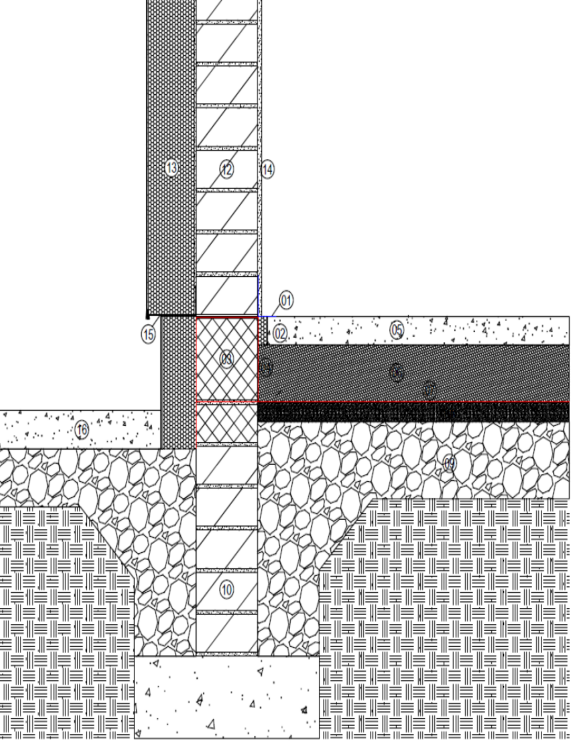
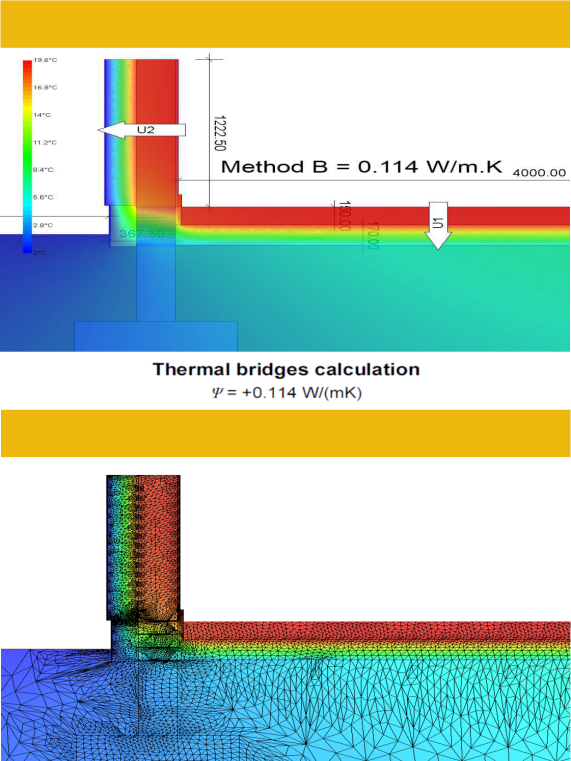
Solid Block Wall: Exterior Insulation for Solid Masonry with Plasterboard & Thin-Coat Internal Finish
Airtightness Sealing: Airtight tapes must be used at junctions to ensure compliance with specified airtightness rating requirements.
Perimeter Insulation: 35 mm floor perimeter insulation must be installed to maintain the airtightness seal and thermal continuity.
Thermal Break Course: Utilize Autoclaved Aerated Concrete (AAC) blocks to maintain a continuous thermal break (Maximum thermal conductivity 0.20 W/mK). AAC blocks must be suitable for foundation conditions, and installation must prevent moisture ingress from affecting thermal performance.
Radon & Moisture Protection: The radon barrier must lap over the AAC blocks and be sealed to the radon membrane below using radon-proof sealant tape to prevent rising damp.
Structural Floor: Concrete floor slabs must strictly comply with the engineer’s specifications and detailed requirements.
Floor Insulation: 150 mm floor insulation (e.g., high-density XPS/EPS).
Radon Barrier Installation: Lay the radon barrier in accordance with the manufacturer’s specifications and detailed requirements.
Sand Blinding: 50 mm sand blinding (leveling layer).
Sub-base (Hardcore): Compacted hardcore layer.
Foundations: Footings and foundation walls must comply with the structural engineer’s specifications.
Insulation Depth: Ensure the External Wall Insulation (EWI) is installed to a depth of at least 200 mm below the finished floor level (FFL).
Wall Structure: 215 mm solid concrete block wall equipped with an External Wall Insulation (EWI) system.
EWI System Composition: The insulation is bonded to the wall using adhesive mortar. The rendering system consists of a polymer-modified base coat, reinforcing mesh, silicone primer, and silicone finish render.
Internal Finish: 15 mm internal cement-lime plaster (including an integrated airtightness parge coat).
Base Track: Galvanized steel starter track (base rail) secured with expansion fixings.
Pavement/Threshold: Pedestrian walkway or building threshold/apron.
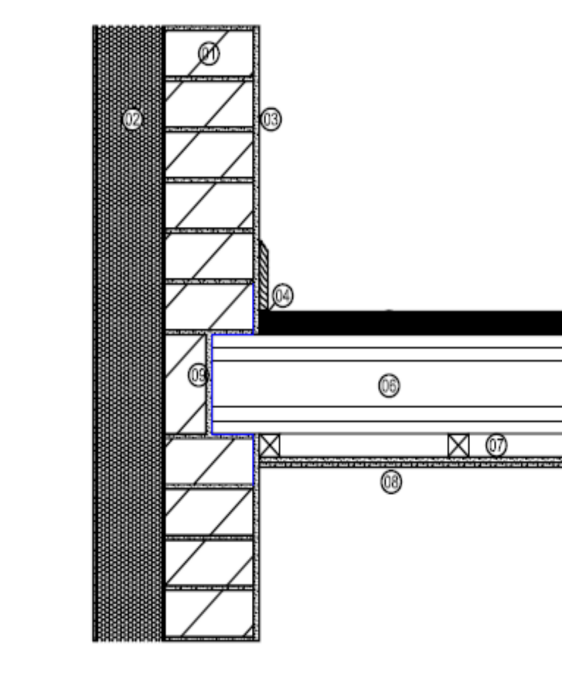
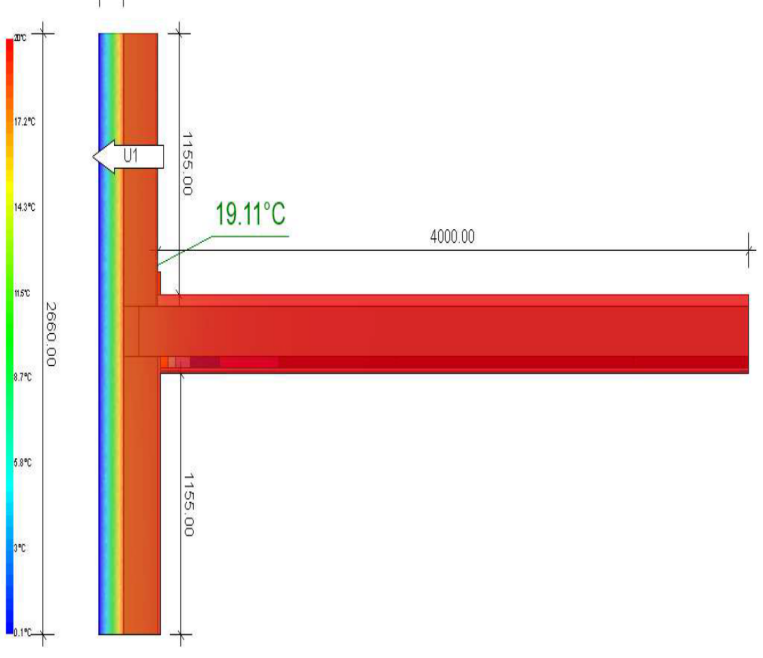
Solid Block Wall (Mid-floor Junction): Exterior Insulation for Solid Masonry with Plasterboard & Thin-Coat Internal Finish
Wall Structure: 215 mm solid concrete block wall.
Adhesive Bonding: The External Wall Insulation (EWI) panels are bonded to the substrate using specialized polymer adhesive mortar.
Rendering System: The system is composed of a polymer-modified base coat, reinforcing mesh, silicone primer, and a silicone decorative finish render.
Internal Finish: 15 mm internal cement-lime plaster (incorporating an integrated airtightness parge coat).
Skirting Detail: Skirting board — use flexible sealant to seal the junction between the skirting and the floor finish to maintain airtightness.
Floor Screed: The leveling screed must comply with the concrete floor manufacturer’s specifications and detailed requirements.
Hollowcore Slabs: The hollowcore precast planks must comply with the floor manufacturer’s specifications and detailed requirements.
Service Void: A designated service zone/void is reserved beneath the floor slab for mechanical and electrical (M&E) routing.
Ceiling Finish: 12.5 mm plasterboard ceiling with a skim coat plaster finish.
Airtightness Continuity: During installation, wrap an airtightness membrane around the ends of the hollowcore planks and seal it securely to the internal surface of the blockwork.
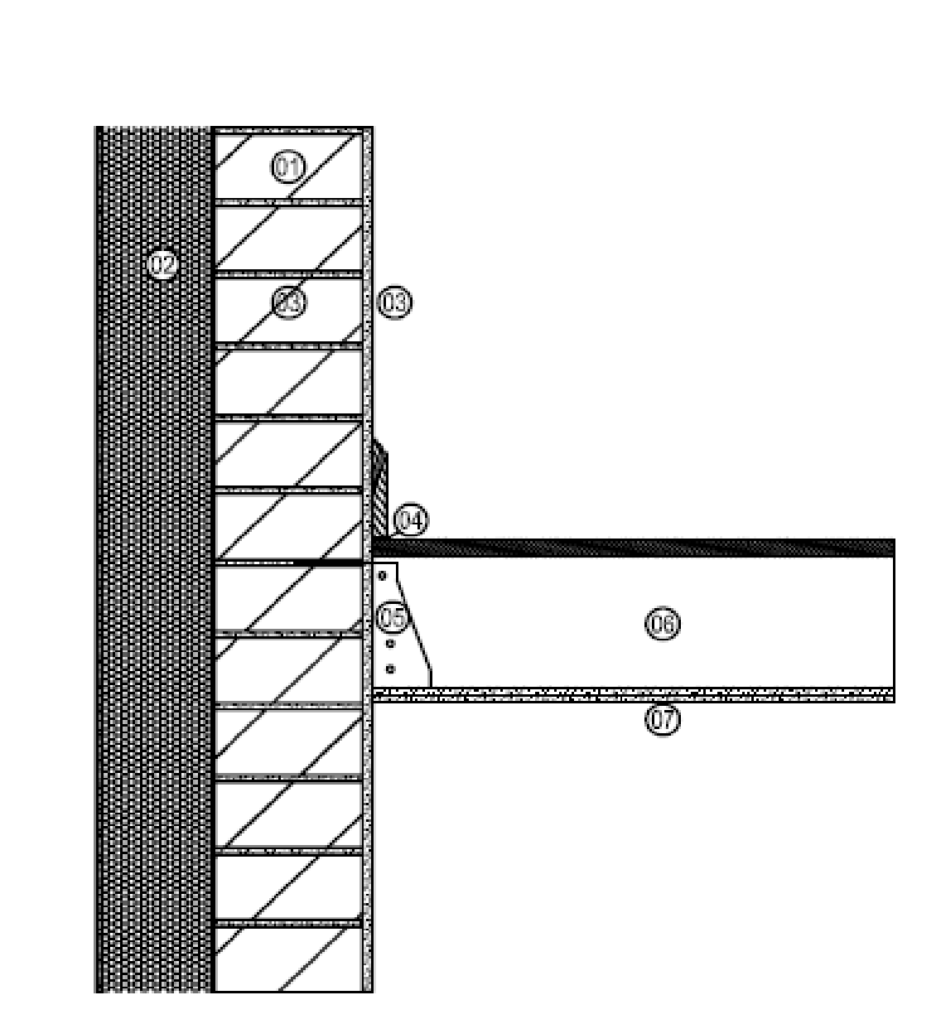
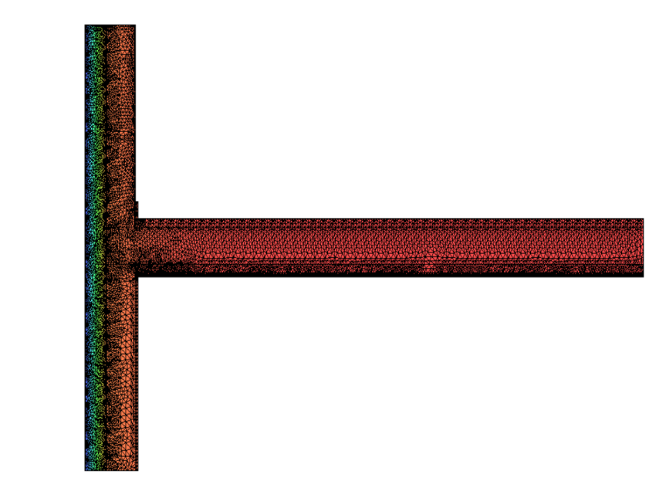
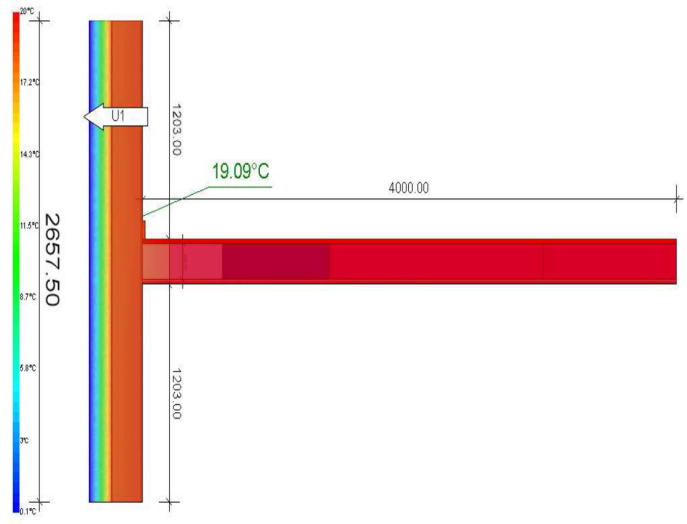
Solid Block Wall (Timber Mid-floor Junction): Exterior Insulation for Solid Masonry with Plasterboard & Thin-Coat Internal Finish
Adhesive Bonding & Rendering: The External Wall Insulation (EWI) panels are bonded to the substrate using specialized polymer adhesive mortar. The rendering system consists of a polymer-modified base coat, reinforcing mesh, silicone primer, and a silicone decorative finish render.
Internal Finish: 15 mm internal cement-lime plaster (incorporating an integrated airtightness parge coat).
Skirting Detail: Skirting board — use flexible sealant to seal the junction between the skirting and the floor finish to maintain the airtightness seal.
Joist Hanger & Airtightness: Galvanized steel joist hangers must comply with the manufacturer’s specifications. During installation, a gap must be reserved behind the hanger flange for the cementitious airtightness parge coat to ensure the continuity of the airtight layer across the entire floor zone.
Floor Joists: Structural floor joists (timber).
Ceiling Finish: 12.5 mm plasterboard fixed to the underside of the floor joists, finished with skim coat plaster.
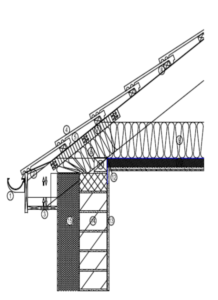
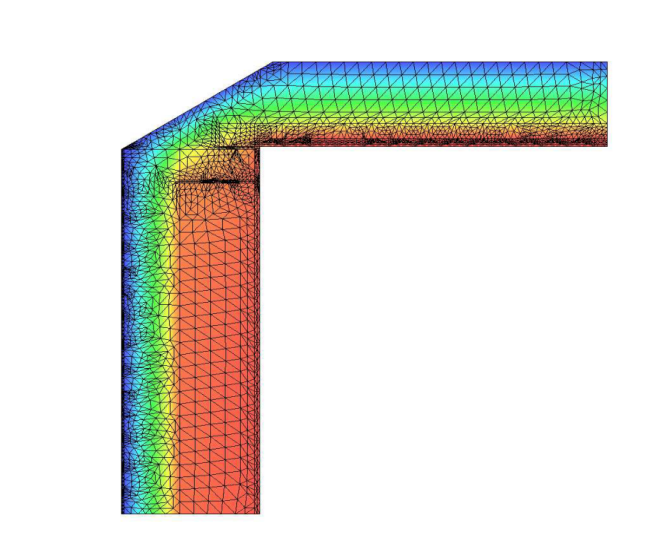
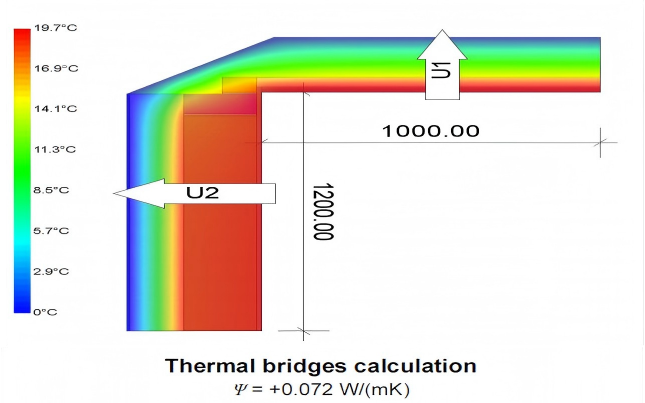
Solid Block Wall (Typical Ventilated Eave/Soffit Junction): Exterior Insulation for Solid Masonry with Plasterboard & Thin-Coat Internal Finish
Rainwater Goods: Gutter (Rainwater gutter).
Eave Support: Tilting fillet / Roofing felt support, installed to prevent the ponding of water in the roofing felt at the eave level.
Ventilation: Ventilated soffit board (Vented soffit).
Roof Covering: Roof tiles or slates.
Underlay: Roofing felt or breathable waterproof membrane.
Thermal Continuity: Ensure the gap between the wall plate and the specialized eave ventilator is fully filled with insulation. The minimum R-value across this insulation thickness must reach 1.2 m²K/W.
Eave Ventilator: Eave vent strip, ensuring a minimum 25 mm unobstructed airflow path above the insulation layer.
Roof Battening: Roofing battens or slate laths.
Ceiling Insulation: Mineral wool or equivalent insulation laid between ceiling joists, compliant with regulations.
Ceiling Finish: Insulated plasterboard with a skim coat plaster finish and an integrated Vapor Control Layer (VCL) on the reverse side.
Wall Plate Securement: 100 mm × 75 mm wall plate bedded on a continuous mortar leveling layer. The plate must be securely fixed to the wall using galvanized steel restraint straps. Straps must be at least 750 mm in length, with at least 450 mm secured to the masonry blockwork.
Airtightness Sealing: Airtightness tape applied at the wall-to-ceiling junction; 15 mm internal cement-lime plaster.
Parge Coat: Integrated airtightness parge coat included within the internal finish.
Wall Structure: 215 mm solid concrete block wall.
EWI System Composition: The External Wall Insulation (EWI) is bonded to the wall using adhesive mortar. The rendering system consists of a polymer-modified base coat, reinforcing mesh, silicone primer, and a silicone decorative finish render.